Lauma Zušēvica
(née Lagzdiņa, born 1954 in Cleveland, Ohio, USA) – pastor, dean, and emerita archbishop
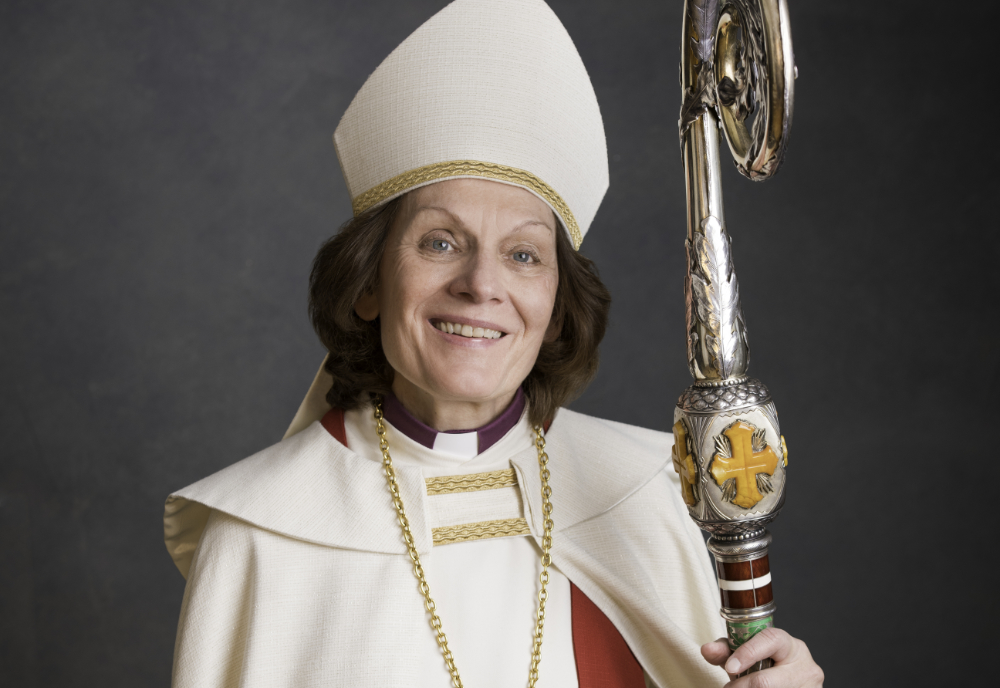
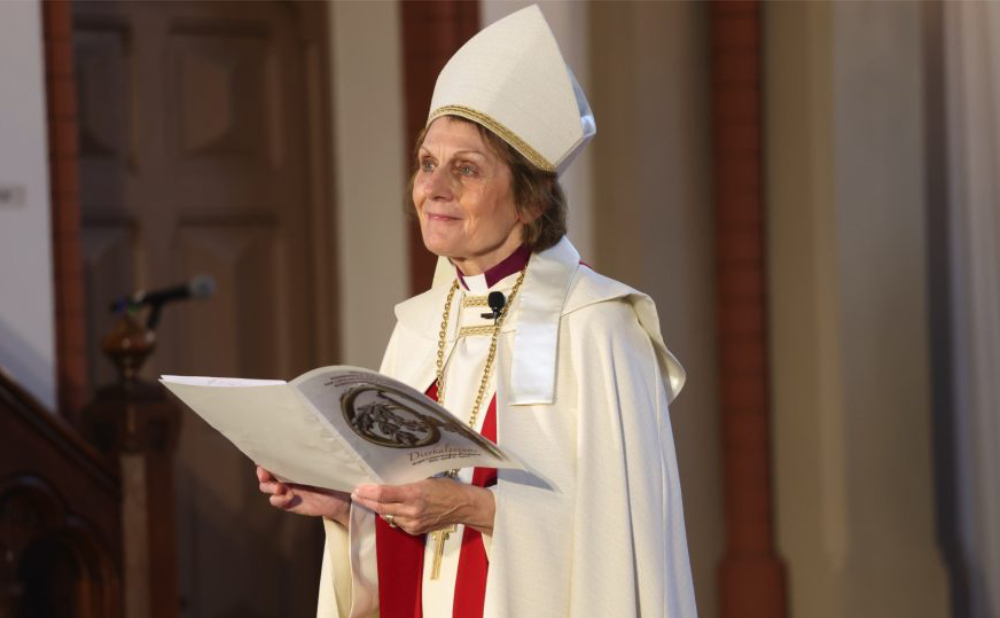
Faith and the Church were a natural part of her life—already as a child she spoke about God’s love while looking at her mother’s plants on the windowsill.
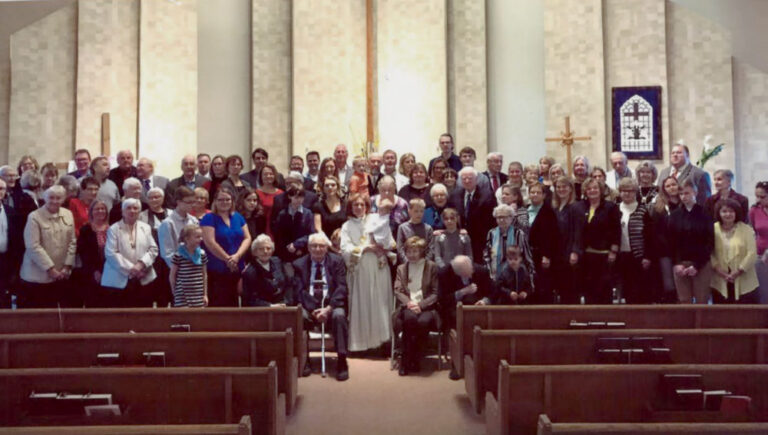
Lauma studied theology at Yale University. She was ordained as a pastor in 1978 and served in the New York congregation (1984–1987) and in Milwaukee (1985–2019), giving special attention to work with children and youth—leading the Latvian Evangelical Lutheran Church in America (LELBA) Youth Department and spending more than 40 summers at children’s camps. She also served as dean of LELBA’s Midwest Region and chair of its administration.
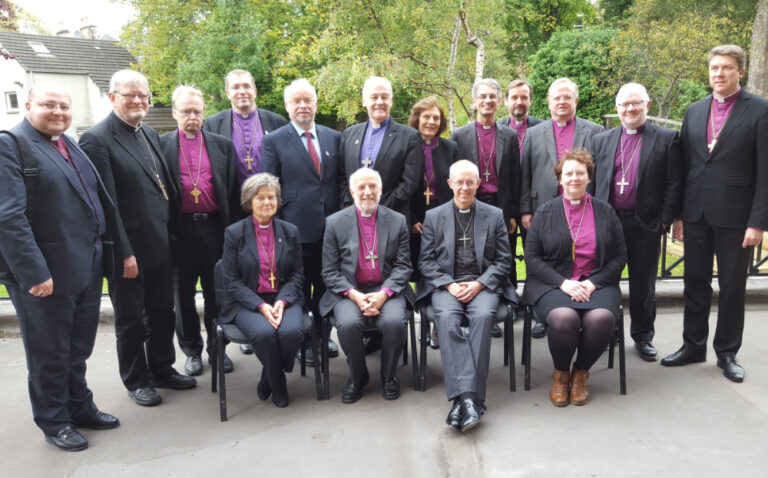
In 2015, Lauma became the first woman to hold the office of archbishop in the Latvian church, serving congregations worldwide. In this role, which she held until 2025, she traveled widely and valued the opportunity to experience the diversity of the Church.
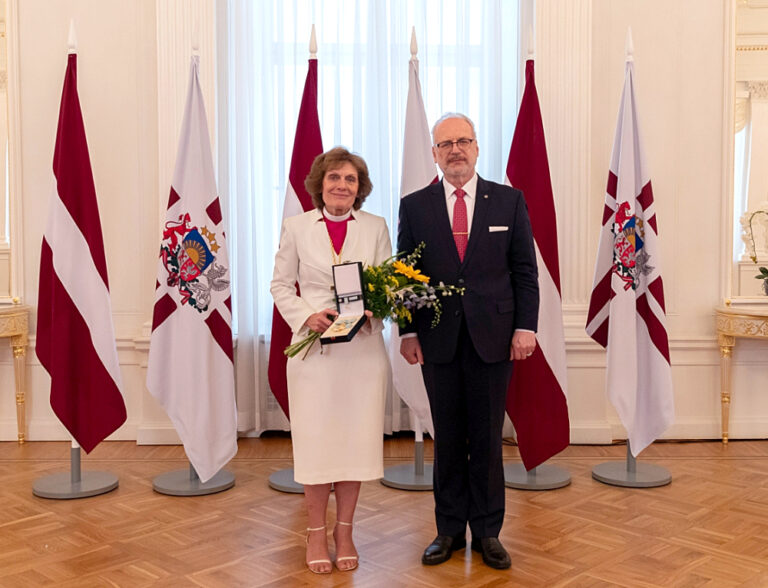
In 2023, she was awarded the Order of the Three Stars (Triju Zvaigžņu ordenis) for her significant contributions to Latvia.
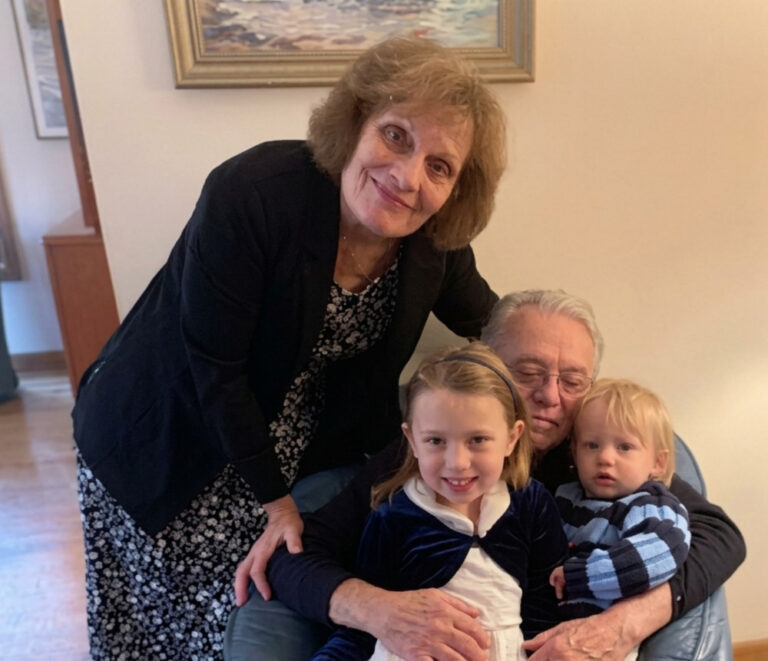
She is grateful for life together with her husband, their daughters, and her beloved grandchildren.
Lauma is a scholar of the New Testament and throughout her life has read the Bible as God’s truth and gift. Her relationship with the text is a living dialogue. While reading, she asks: “What does this mean for me today?” For when we return to familiar passages, we are no longer the same people we once were.
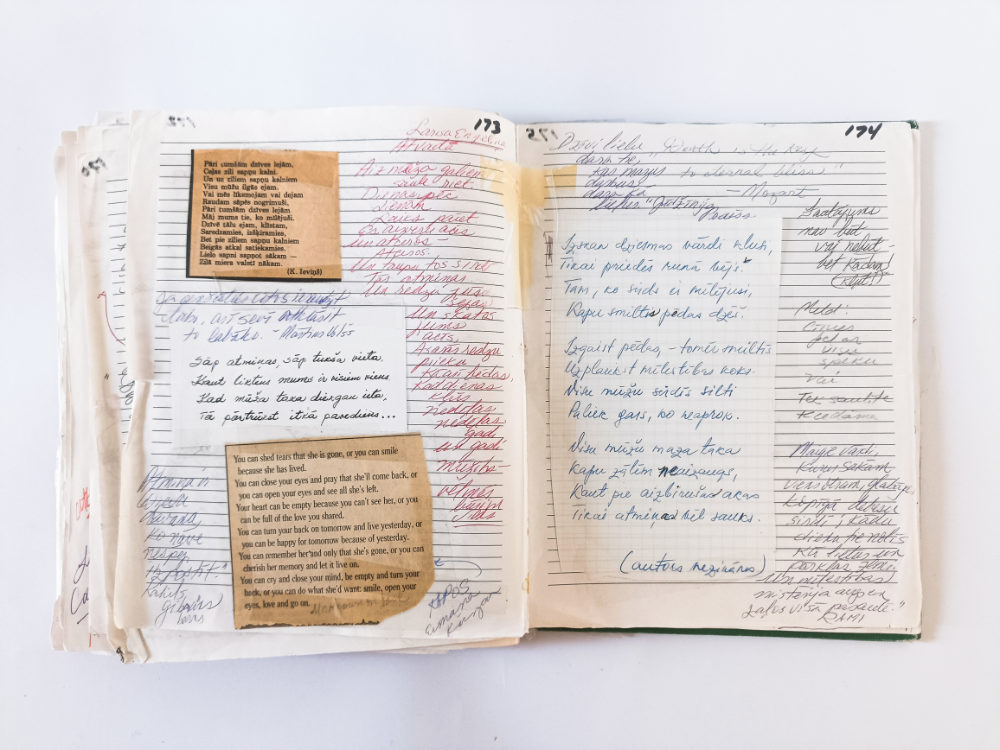
Notebook, one of Lauma Zušēvica’s notebooks filled with excerpts of poetry and aphorisms, used as material for sermons and addresses. Wisconsin, USA, 1990s
While reading, I wrote down words that spoke to my heart. When I received greetings, I copied meaningful words I found there. Soon the notebook ran out of space, and pages began to fall out. I now have two smaller notebooks already filled, but I still continue writing down everything that seems valuable and useful for my work.
When visiting the sick, I always left them a card. On it I would write words from Scripture and often also poems copied into this notebook. I did the same when writing birthday greetings or words of condolence to the bereaved.
n funerals, in sermons, and in reflecting on biblical texts, I have always drawn on the words of others—those who have also found wisdom and inspiration in the same texts. Under the guidance of the Holy Spirit, the words of others can also be of use—whether from the distant past or from just yesterday.
I asked: ‘Are you ill? I’m sorry to hear that.’
‘No, no, but you cannot bury me.’
So I said: ‘All right. It’s good that in New York there are two male pastors, and surely one of them will be able to bury you.’
He was surprised that I didn’t argue further. He kept coming to services. About eight months later, after a service, he came up again and said: ‘Now you can bury me.’
I asked once more: ‘Are you well? Is everything all right?’
And he said: ‘Yes. But if I were to die now, then you could bury me.
The Milwaukee Journal, August 3, 1985
LATVIA KEPT ALIVE IN MINISTER’S WORK
By MILDRED FREESE of The Journal staff
Each Sunday, a Lutheran minister sings the liturgy in Latvian as part of her way of serving God.
She talks in Latvian to her two daughters, Zile, 3, who is walking around the family living room in her mother’s high heels, and golden-haired Kaija, 18 months. Each girl will learn to speak English when she turns 4.
Keeping the Latvian language alive is part of her calling. The many languages and different customs in the world illustrate God’s greatness, that there can be such diversity, she said.
There is more than that, but from a religious standpoint, that is part of the thinking of the Rev. Lauma Lagzdins-Zusevics.
Since December, she has been pastor of St. John’s Latvian Lutheran Church. The congregation shares use of the church building at 1853 N. 75th St., Wauwatosa, with another Latvian congregation. The church’s Sunday school facilities are donated to an Independent Latvian Grade School, which meets there on Saturdays.
Zusevics is one of four women ordained in the Latvian Evangelical Lutheran Church of America, a separate synod that is incorporated in the unifying body of most Lutheran groups, the Lutheran Council in the USA.
She was ordained seven years ago in Cleveland where she had grown up. She took her first church, a congregation with more than 2,000 members, four years ago In Melville, Ν.Υ.
Last year, her husband, Ivars, an architect, took a job in Chicago and then in Milwaukee. She commuted from Chicago to Milwaukee from December to April. Since April the couple and their two children have lived in Greendale.
Zusevics has great loyalty to Latvia, an area she has never seen and which technically ceased to be a separate entity when it was taken over by the Soviet Union in 1941. Latvia is now a Soviet republic. She was brought up with a love of Latvia, its culture and its language so intense that she still gets angry at the occupation of that country. So she and her husband, who is also of Latvian descent, will bring up their children to speak Latvian at home and English in the outside world.
American Latvians act as a support group for those people who are still in Latvia and who are not free to speak what they think, she said.
So at Sunday services at 9:30 a.m. during the summer, and 10:30 a.m. during the school year, the Lutherans who gather with her sing and listen to a Latvian service. She has a children’s sermon as part of the adult worship. The congregation has about 320 members.
On Saturdays, she teaches Bible studies and Christian ethics at the Latvian school. There are about 50 to 75 pupils, sald the principal, Eriks Krumins. Krumins estimated that about 2,000 Latvians were in the Milwaukee area, a fairly stable number since the late 1940s and early 1950s.
The school is non-denominational, but about 90% of the pupils are Lutheran. Most Latvians are Lutheran, Krumins and Zusevics said. The next most prominent religions are Catholic and Baptist, they said. All denominations who speak Latvian are welcome in the school.
Most of the pupils come from the two congregations that share the 75th St. church, Krumins said, but some come from a third congregation. Zusevics’ congregation shares the church with Milwaukee Evangelical Lutheran Latvian church, run by the Rev. Kristaps Valters. The third Milwaukee church is Christ Latvian Evangelical Lutheran Church at 1900 W. Washington St., whose pastor is the Rev. Visvaldis Rumpeteris.
Being a woman minister and from a small ethnic group has produced instances where people express doubt about her, she said. She tries not to defend herself, she said, but rather to let her work speak for itself.
……..
Lauma Zušēvica
(née Lagzdiņa, born 1954 in Cleveland, Ohio, USA) – pastor, dean, and emerita archbishop
Faith and the Church were a natural part of her life—already as a child she spoke about God’s love while looking at her mother’s plants on the windowsill.
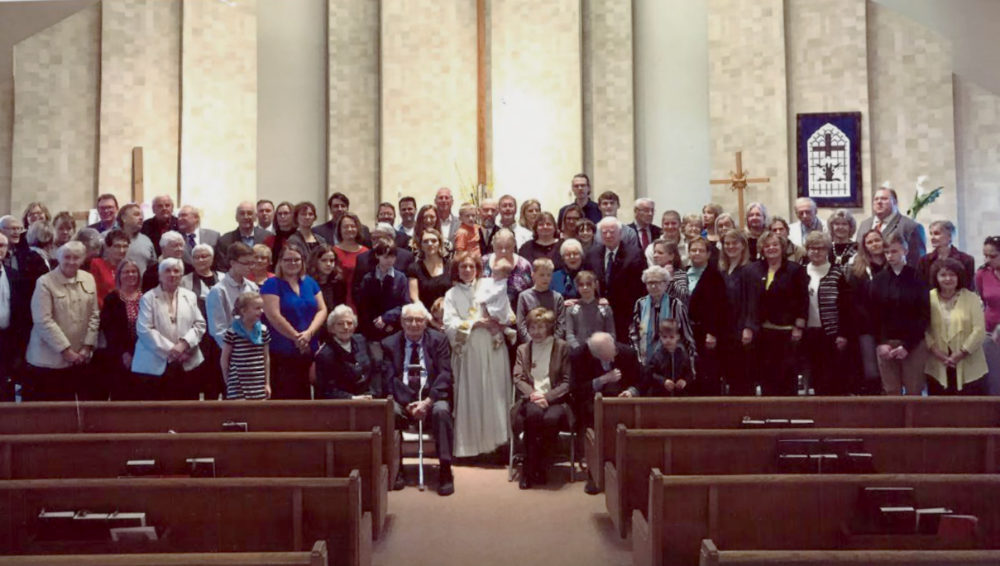
Lauma studied theology at Yale University. She was ordained as a pastor in 1978 and served in the New York congregation (1984–1987) and in Milwaukee (1985–2019), giving special attention to work with children and youth—leading the Latvian Evangelical Lutheran Church in America (LELBA) Youth Department and spending more than 40 summers at children’s camps. She also served as dean of LELBA’s Midwest Region and chair of its administration.
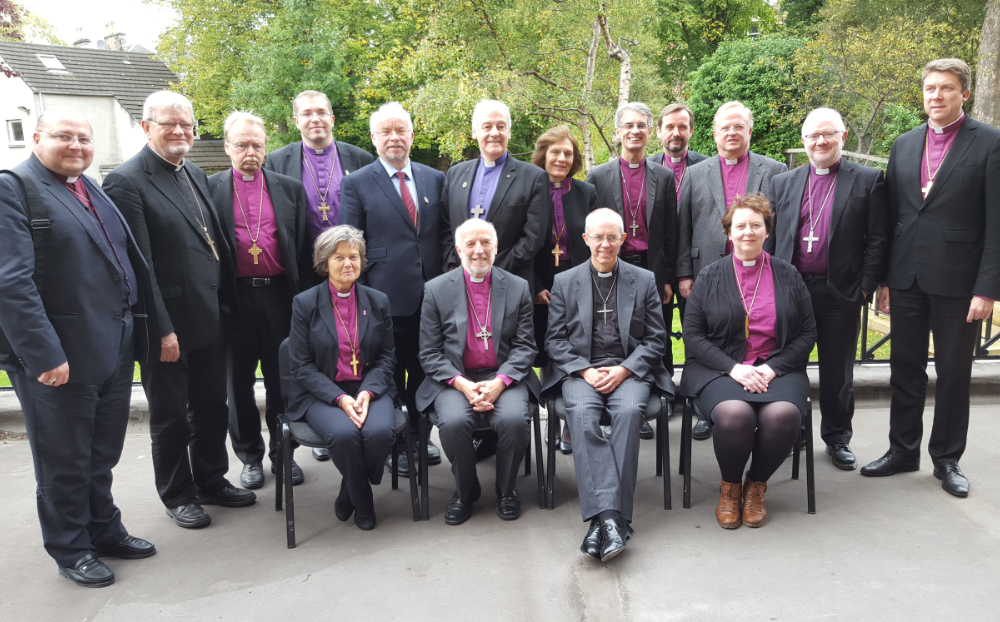
In 2015, Lauma became the first woman to hold the office of archbishop in the Latvian church, serving congregations worldwide. In this role, which she held until 2025, she traveled widely and valued the opportunity to experience the diversity of the Church.
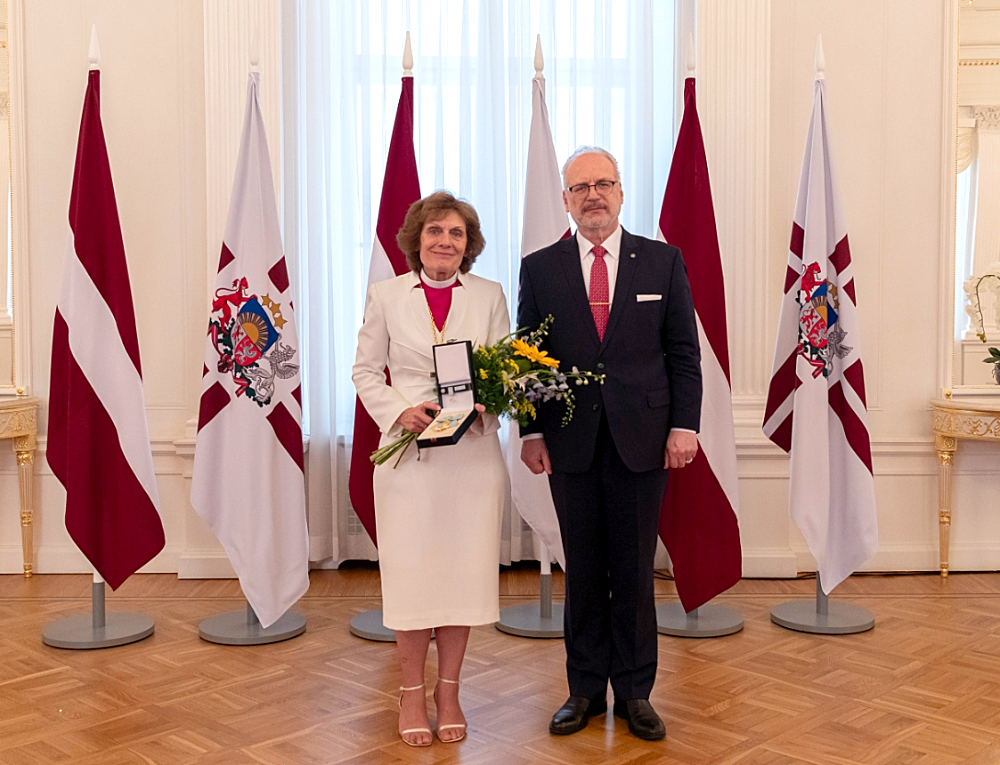
In 2023, she was awarded the Order of the Three Stars (Triju Zvaigžņu ordenis) for her significant contributions to Latvia.
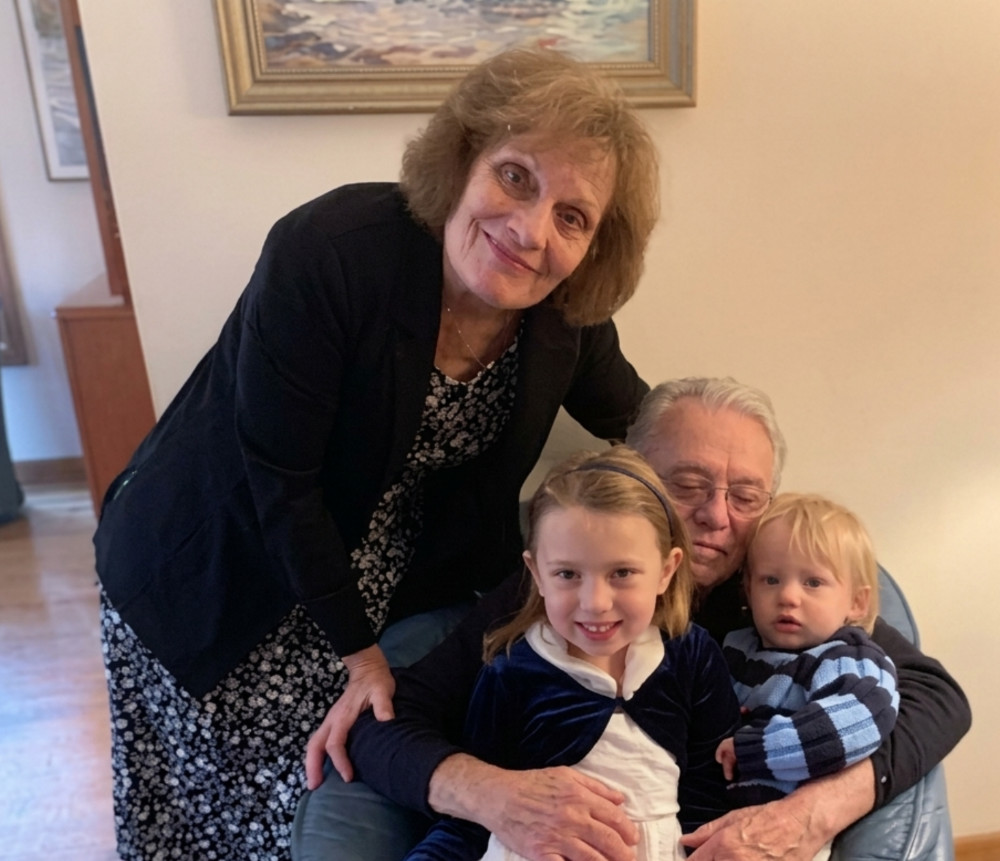
She is grateful for life together with her husband, their daughters, and her beloved grandchildren.
Lauma is a scholar of the New Testament and throughout her life has read the Bible as God’s truth and gift. Her relationship with the text is a living dialogue. While reading, she asks: “What does this mean for me today?” For when we return to familiar passages, we are no longer the same people we once were.
Notebook, one of Lauma Zušēvica’s notebooks filled with excerpts of poetry and aphorisms, used as material for sermons and addresses. Wisconsin, USA, 1990s
“While reading, I wrote down words that spoke to my heart. When I received greetings, I copied meaningful words I found there. Soon the notebook ran out of space, and pages began to fall out. I now have two smaller notebooks already filled, but I still continue writing down everything that seems valuable and useful for my work.
When visiting the sick, I always left them a card. On it I would write words from Scripture and often also poems copied into this notebook. I did the same when writing birthday greetings or words of condolence to the bereaved.
n funerals, in sermons, and in reflecting on biblical texts, I have always drawn on the words of others—those who have also found wisdom and inspiration in the same texts. Under the guidance of the Holy Spirit, the words of others can also be of use—whether from the distant past or from just yesterday.”
I asked: ‘Are you ill? I’m sorry to hear that.’
‘No, no, but you cannot bury me.’
So I said: ‘All right. It’s good that in New York there are two male pastors, and surely one of them will be able to bury you.’
He was surprised that I didn’t argue further. He kept coming to services. About eight months later, after a service, he came up again and said: ‘Now you can bury me.’
I asked once more: ‘Are you well? Is everything all right?’
And he said: ‘Yes. But if I were to die now, then you could bury me.
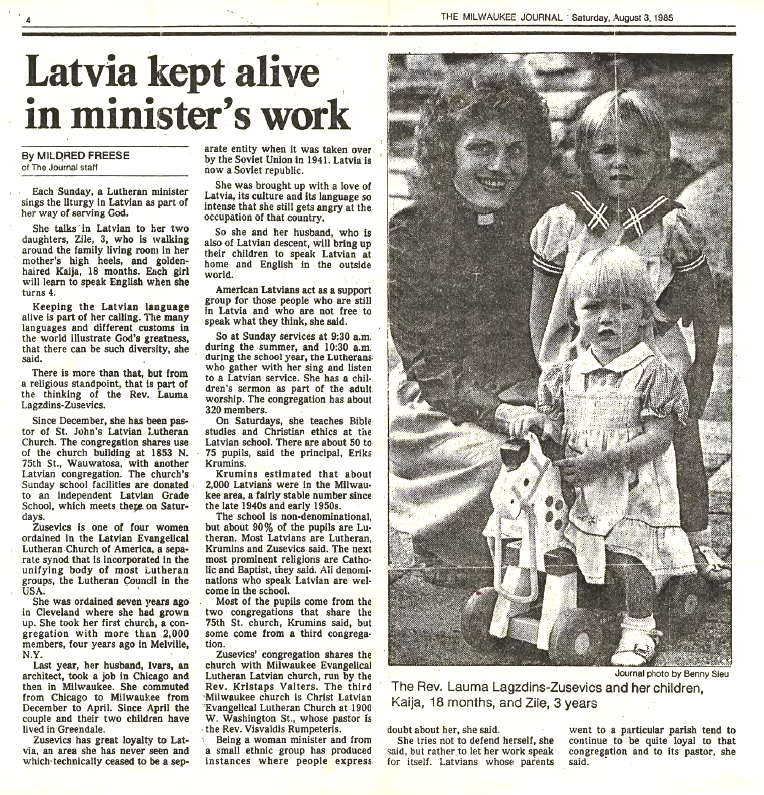
The Milwaukee Journal, August 3, 1985
LATVIA KEPT ALIVE IN MINISTER’S WORK
By MILDRED FREESE of The Journal staff
Each Sunday, a Lutheran minister sings the liturgy in Latvian as part of her way of serving God.
She talks in Latvian to her two daughters, Zile, 3, who is walking around the family living room in her mother’s high heels, and golden-haired Kaija, 18 months. Each girl will learn to speak English when she turns 4.
Keeping the Latvian language alive is part of her calling. The many languages and different customs in the world illustrate God’s greatness, that there can be such diversity, she said.
There is more than that, but from a religious standpoint, that is part of the thinking of the Rev. Lauma Lagzdins-Zusevics.
Since December, she has been pastor of St. John’s Latvian Lutheran Church. The congregation shares use of the church building at 1853 N. 75th St., Wauwatosa, with another Latvian congregation. The church’s Sunday school facilities are donated to an Independent Latvian Grade School, which meets there on Saturdays.
Zusevics is one of four women ordained in the Latvian Evangelical Lutheran Church of America, a separate synod that is incorporated in the unifying body of most Lutheran groups, the Lutheran Council in the USA.
She was ordained seven years ago in Cleveland where she had grown up. She took her first church, a congregation with more than 2,000 members, four years ago In Melville, Ν.Υ.
Last year, her husband, Ivars, an architect, took a job in Chicago and then in Milwaukee. She commuted from Chicago to Milwaukee from December to April. Since April the couple and their two children have lived in Greendale.
Zusevics has great loyalty to Latvia, an area she has never seen and which technically ceased to be a separate entity when it was taken over by the Soviet Union in 1941. Latvia is now a Soviet republic. She was brought up with a love of Latvia, its culture and its language so intense that she still gets angry at the occupation of that country. So she and her husband, who is also of Latvian descent, will bring up their children to speak Latvian at home and English in the outside world.
American Latvians act as a support group for those people who are still in Latvia and who are not free to speak what they think, she said.
So at Sunday services at 9:30 a.m. during the summer, and 10:30 a.m. during the school year, the Lutherans who gather with her sing and listen to a Latvian service. She has a children’s sermon as part of the adult worship. The congregation has about 320 members.
On Saturdays, she teaches Bible studies and Christian ethics at the Latvian school. There are about 50 to 75 pupils, sald the principal, Eriks Krumins. Krumins estimated that about 2,000 Latvians were in the Milwaukee area, a fairly stable number since the late 1940s and early 1950s.
The school is non-denominational, but about 90% of the pupils are Lutheran. Most Latvians are Lutheran, Krumins and Zusevics said. The next most prominent religions are Catholic and Baptist, they said. All denominations who speak Latvian are welcome in the school.
Most of the pupils come from the two congregations that share the 75th St. church, Krumins said, but some come from a third congregation. Zusevics’ congregation shares the church with Milwaukee Evangelical Lutheran Latvian church, run by the Rev. Kristaps Valters. The third Milwaukee church is Christ Latvian Evangelical Lutheran Church at 1900 W. Washington St., whose pastor is the Rev. Visvaldis Rumpeteris.
Being a woman minister and from a small ethnic group has produced instances where people express doubt about her, she said. She tries not to defend herself, she said, but rather to let her work speak for itself.
……..